
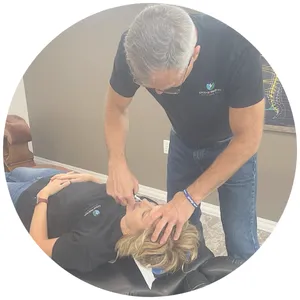
To understand how CFR works, it is important to realize that the skull is not a solid bone. It is made up of 22 individual bones that actually move every time you breathe - or at least they are supposed to.
The objective of the CFR technique is to mobilize the bones in the face and cranium and to open up the breathing passageways with the purpose of mobilizing the cranial bones and facilitating normal cranial function.
Most people who come in for CFR treatment are last resort patients who have tried everything else. CFR often succeeds where other forms of conventional treatment have failed.
CFR Video by Global Wellness
Conditions that respond favorably to CFR treatment:
Breathing Disorders Learning Disorders Attention Deficit Disorders
Sinus Conditions Snoring Neurological Disorders
Sleep Apnea Emotional Disorders Migraine Headaches
Hearing Impairments Head Trauma Vision, Stigmatism
Post Concussion Syndrome Glaucoma Chronic Fatigue Syndrome
Anxiety Trigeminal Neuralgia Autism
Facial Paralysis Depression Bell's Palsy
Neurosis Tinnitus Epilepsy
Vertigo Down Syndrome Seizures
Cerebral Palsy Strokes Multiple Sclerosis
Insomnia Muscular Dystrophy TMJ Disorder
Parkinson's Tremors